Written by Benoît Vancauwenberghe, European strategist and leading expert on Generation Z
Do video games make Gen Z smarter or more distracted?
Share on :
Images designed with next-gen intelligence.
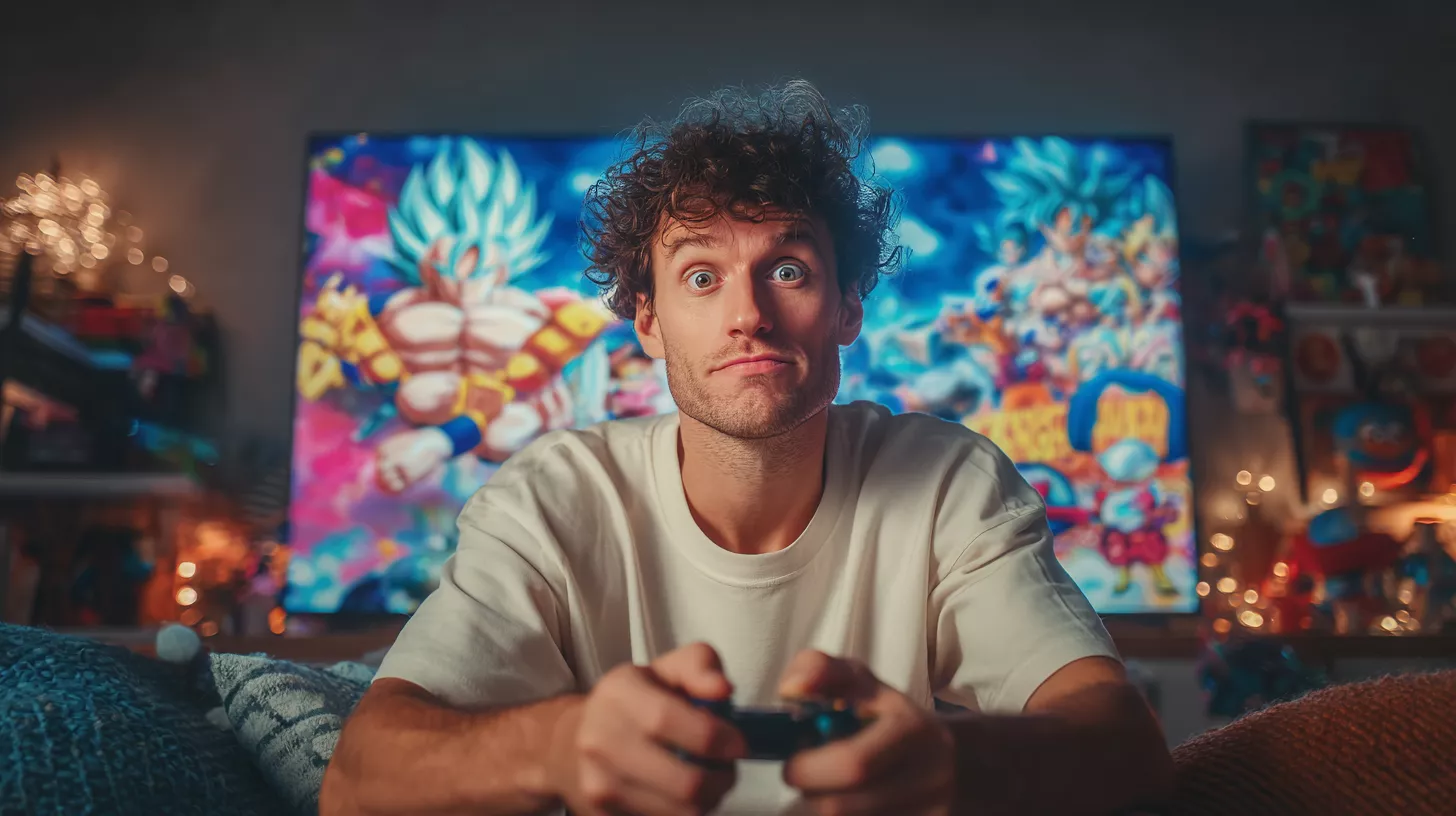
Summary: Video games do not inherently harm Gen Z’s attention. Research shows that moderate, structured gaming can improve focus, memory, and problem‑solving skills, while excessive or addictive use is associated with attention loss and reduced academic performance.
A new look at the cognitive cost of play
If I were 12 today, I’d probably be on Roblox, building digital worlds and hopping into voice chats with friends. But would I be learning or just zoning out?
This is the question haunting parents, teachers, and policymakers. And increasingly, Gen Z themselves. What if gaming isn’t just a pastime, but a training ground? Or worse: a cognitive trap?
Let’s explore what the science actually says, and why the conversation around video games, attention, and learning is far more complex than it appears.
Not all screen time is created equal.
Video games have long been vilified: blamed for shortened attention spans, poor academic performance, and even violence. But the reality is more nuanced.
New research reveals that the effects of gaming on attention and cognition depend not only on how long children play, but also on what and how they play. Action games can improve visual attention and reaction time. Puzzle games boost problem-solving. Even so-called “casual games” can sharpen focus—if used right. But there’s a limit. When screen time exceeds 20 hours per week, especially without structure or balance, the benefits plateau and the risks increase: attention deficits, sleep disruption, and emotional fatigue.
A generation wired for contradiction
Gen Z grew up immersed in screens. They’re hyper-connected, yet chronically distracted. Studies show that 50% of researchers believe video games reduce attention spans in youth. The other half says they enhance specific kinds of focus. Who’s right? Maybe both.
Because Gen Z’s relationship with technology is defined by paradox: They’re more emotionally articulate online, yet struggle with face-to-face confrontation. They’re addicted to dopamine loops, yet excel at rapid learning. They disengage in class but hyper-focus on Fortnite strategies for hours. They aren’t lazy or broken. They’re signaling. And video games are just one of their languages.
Signals, not symptoms
Let’s not misread the signs. When a 14-year-old loses track of time gaming, it’s easy to diagnose addiction. Harder is asking: what’s missing in their offline world? Trust, stimulation, agency?
Games offer instant feedback, clear goals, and peer collaboration. School often offers the opposite: delayed validation, rigid paths, and isolation. The issue isn’t just “games vs. school.” It’s relevance vs. routine.
As I wrote in From Signal to Shift, Gen Z often speaks through what looks like distraction: a camera turned off in class, a game open during homework, a refusal to engage. But these are not failures. They’re signals. And they demand interpretation, not condemnation.
What science tells us
Let’s cut through the noise with a few findings:
- Improved cognitive flexibility: Action games can enhance working memory, selective attention, and task-switching skills.
- However, excessive play (>20 h/week) correlates with poorer emotion recognition and academic decline.
- Strategic genres such as puzzle and simulation games enhance visuospatial reasoning and coordination.
- Therapeutic potential: Specially designed games are helping children with ADHD improve focus and planning.
Key Takeaways
|
Effect |
Moderate Play (<15h/week) |
Excessive Play (>20h/week) |
|
Visual Attention |
Improved |
Neutral or Declines |
|
Working Memory |
Strengthened |
Weakens |
|
Academic Performance |
Stable or Improved |
Declines |
|
Emotion Recognition & Regulation |
Stable |
Deteriorates |
|
Sleep & Mood |
Balanced |
Disrupted |
So, what should we do with all this?
We need to move beyond moral panic or tech utopia. The conversation shouldn’t be “Are video games good or bad?” but:
- What kind of games are being played?
- How often and in what context?
- Are they replacing or complementing meaningful real-world activities?
And most importantly: Are we listening to what Gen Z is telling us, through their habits, preferences, and patterns of play?
From distraction to design
Here’s a provocation: What if schools embraced game design as a literacy skill? What if students earned cognitive badges based on game-based learning? What if gaming wasn’t escapism, but a sandbox for learning?
In Estonia and Finland, some schools are already piloting these ideas. They’re treating video games not as threats, but as tools for engagement. And the results? Higher focus, more collaboration, and yes, better test scores.
Gaming is not the enemy of learning. Boredom is. If schools, parents, and employers want to tap Gen ZAlpha’s potential, they must understand their behaviors rather than police them. And that starts with listening to what their gameplay is trying to teach us.
Q&A
Not directly. However, excessive gaming can mimic symptoms of inattention and impulsivity, particularly when it is unstructured. For kids with ADHD, therapeutic games may actually help.
Puzzle, strategy, and simulation games are most positively associated with improved attention, memory, and problem-solving.
Research suggests that up to 15 hours per week can offer cognitive benefits. Beyond 20 hours, the risk of adverse effects increases.
No, but they are becoming parallel learning systems. Platforms like YouTube, Discord, and AI-driven games offer skills that schools often neglect: collaboration, resilience, and digital fluency.
Want to go beyond the article? Let’s talk strategy.
If this resonated with you as a parent, educator, HR leader, or policymaker, it’s time to bridge the gap between research and action. As Europe’s leading Gen Z keynote speaker and youth culture consultant, I help teams decode what’s changing and design what comes next.


You may also like these articles
Explore our collection of articles decoding youth culture, Gen Z, and Gen Alpha.