Screen time is not inherently harmful. It becomes problematic when it replaces essential developmental experiences like outdoor play, sleep, and real-world social interaction.
How to get kids off their phones (the real problem isn’t screen time)
Share on :
Images designed with next-gen intelligence.
Written by Benoît Vancauwenberghe, European strategist and leading expert on Generation Z.
Introduction: The Parental Paradox
When I consult with parents of teenagers today, the conversation rarely starts with academic grades or career goals. It starts with a sense of profound loss. A recurring pattern: fading connection, constant friction over screens, and a quiet erosion of family cohesion. Many parents feel they have failed as disciplinarians. But this isn’t a failure of willpower. It’s a systemic shift in the architecture of childhood itself.
True research, I see a generation where parents haven’t lost their status as protectors, but they’ve lost the ability to reach their children where it matters most. We didn’t lose authority. We lost access. The core issue isn’t screen time. It’s environmental displacement. We are no longer dealing with a simple “screen time” issue. We are witnessing a complete rewiring of the human developmental experience, moving from physical exploration to digital immersion. The real problem isn’t screen time. It’s the replacement of real-world developmental experiences by digital environments.
The great rewiring: from play-based to phone-based
Between 2010 and 2015, childhood didn’t evolve. It shifted. Fast. The most significant transformation in human history didn’t happen over centuries; it happened between 2010 and 2015. This was the era of the “Great Rewiring,” where the fundamental nature of being a child shifted from the physical world to the digital one.
- Play-Based Childhood (Pre-2010): Centered on outdoor, unsupervised play. Children learned through physical risk, trial and error, and direct face-to-face social interaction. This environment naturally fostered autonomy and biological resilience.
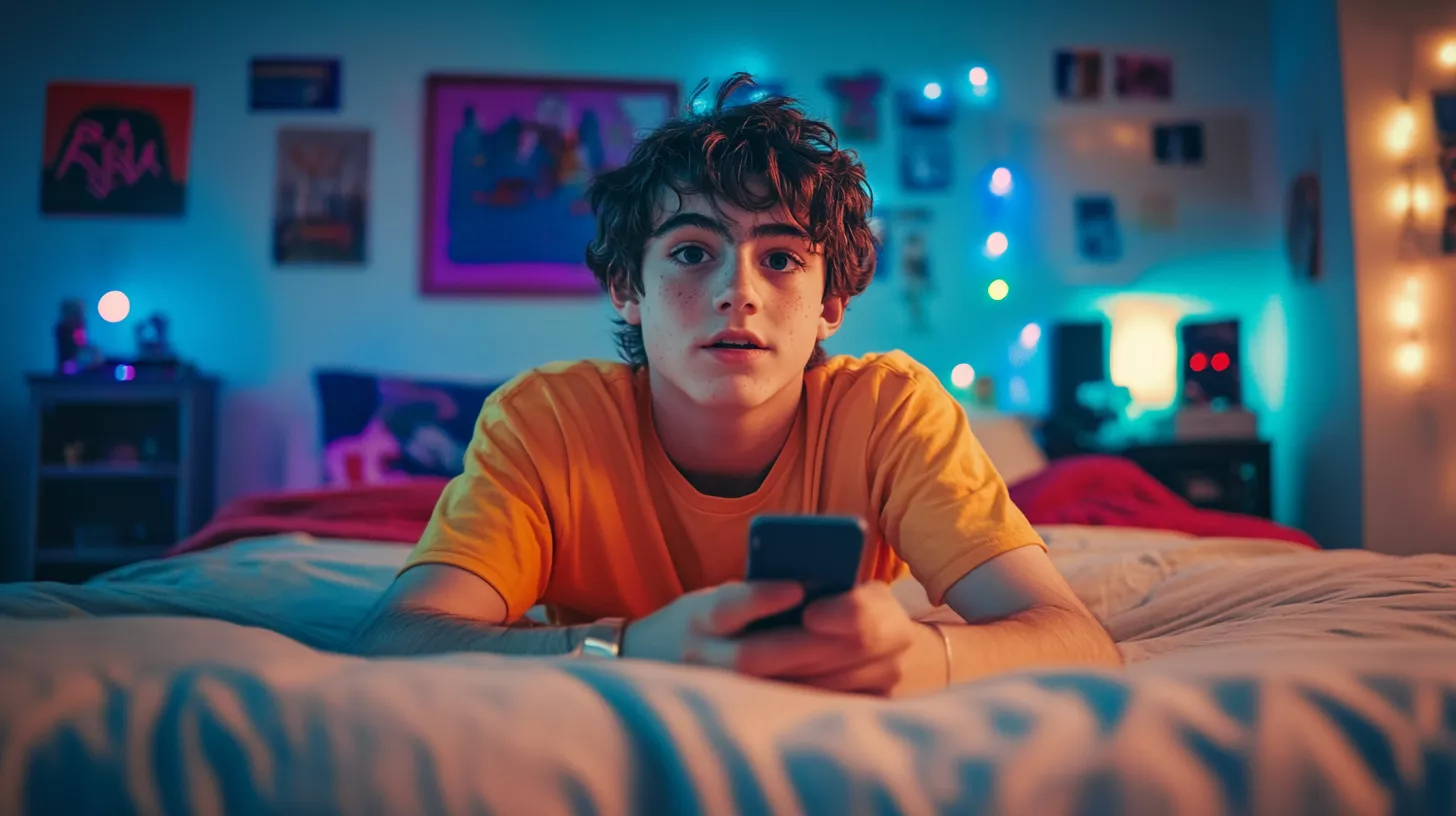
- Phone-Based Childhood (Post-2010): Centered on an indoor, screen-mediated life. Physical risks have decreased, but psychological exposure has exploded. Identity is no longer forged through action; it is curated through visibility and constant feedback.
The speed of this shift was staggering. In 2012, smartphone ownership among teens was a minority at roughly 20–25%. According to the Pew Research Center, this was one of the fastest technology adoption curves ever recorded among adolescents. This wasn’t evolution. It was an environmental shock. Kids today are not growing up differently. They are growing up in a different system.
The performance trap: when social life becomes a stage
We need to stop calling it communication. Its performance. The front-facing camera changed everything. Platforms like Instagram and Snapchat didn’t just digitize interaction—they transformed it into a continuous act. Every moment is now:
- visible
- measurable
- comparable
Social media didn’t just amplify social life — in many cases, it replaced parts of it with performative behavior. They are managing perception. And when life becomes performance, something critical disappears: friction, awkwardness, rejection, everything that builds real-world resilience. As a wellness strategist, I don’t see a 14-year-old as a beginner. I see a user with 3–5 years of behavioral conditioning in reward-based systems. They’ve learned to seek validation before they’ve learned to build identity.
A gendered crisis: internalization vs externalization
The “Great Rewiring” does not strike all children the same way, but the root environmental misalignment is identical.
- Girls (Internalization): The crisis manifests as anxiety, depression, and body image disorders. According to WHO Europe, girls report twice as much psychological distress as boys. They are trapped in visual and social feedback loops, likes, comments, and filters, that make social comparison unavoidable and continuous.
- Boys (Externalization): The crisis manifests as social withdrawal and reduced motivation in real-world settings. They are prone to gaming overuse and pornography exposure, finding easy hits of dopamine in “reward-based” digital environments that make the physical world seem dull and demanding by comparison.
Both outcomes stem from the same root: a mismatch between biology and environment.
The stillness default: a European perspective
In the EU, approximately 1 in 5 adolescents report mental health difficulties. In Belgium, we see a “high awareness but still rising problems” context, with sharp increases in anxiety and sleep disorders.
- The Sleep Crisis: Between 30% and 50% of European adolescents get less sleep than recommended, largely due to nighttime smartphone use. We are currently trying to motivate tired bodies and exhausted brains.
- The Activity Decline: WHO Europe reports that 80% of adolescents are not sufficiently active, with the sharpest drop-off occurring around age 13 or 14, the exact moment they are most digitally conditioned.
Exactly when smartphone immersion peaks. The problem isn’t motivation. It’s that movement is no longer the default state. We removed movement. And replaced it with stillness. Then we blamed the child.
The Gym as a Corrective Sanctuary
A client of mine, a European gym association, recently posed a simple yet profound question: What if we opened our gyms to a younger audience, starting from age 14 instead of 16 or 18? Could this help a generation grappling with anxiety, mental health challenges, and social disconnection?
As childhood shifts from the physical to the digital realm, the role of physical spaces is no longer just about fitness; it becomes corrective. If we open gyms to 14-year-olds, it’s not just a business decision; it’s a developmental responsibility. It is a chance to help them reclaim the fundamental, biological experiences that screens have steadily eroded.
Strategic Balance: Potential Benefits vs. Risks
- Potential Benefits:
- Structure and Routine: Cultivates a sense of physical agency and control.
- Real-World Interaction: Encourages engagement with the immediate, offline environment.
- Confidence Building: Fosters competence and self-assurance through tangible physical progress.
- Potential Risks:
- The “Instagram Effect”: Gym mirrors and social media create a “performance trap,” pressuring young people to constantly document their physique.
- Comparison Culture: In adult-dominated gym environments, body-image pressures intensify, fostering a culture of comparison.
- Intimidation Factor: A lack of proper coaching can lead to injury, while the intimidating atmosphere may cause social withdrawal.
Opening gyms to 14-year-olds could be part of the solution, but only if we understand one crucial thing: this isn’t about granting access to fitness; it’s about contributing to the construction of a human being. This generation doesn’t need more spaces to perform; they need spaces to grow.
If done right, the gym becomes a sanctuary where teenagers can rebuild confidence, develop social skills, and regain control over their bodies. If done wrong, we don’t just fail to solve the problem—we amplify it.
Therefore, the question isn’t whether we should open gyms to 14-year-olds. The real question is: are we ready to take responsibility for what happens next?
Realigning the Environment
Gen Z isn’t inherently weak or unmotivated; they are misaligned with their environment. They find themselves mentally overstimulated, physically understimulated, and socially underdeveloped. If we open our gym doors to 14-year-olds, we must recognize that they seek more than just muscle. This requires us to ask a difficult question: Are we offering a genuine solution, or are we simply relocating their problems into our space? In an age dominated by digital existence, physical movement is no longer optional. The gym must evolve into a sanctuary for what is real, raw, and resilient.
If you want kids off their phones, the most effective strategy is not restriction, it’s rebuilding environments that make real life more engaging than screens.
Q&A
There is no universal threshold, but screen time is considered excessive when it displaces physical activity, sleep, and face-to-face interaction.
Unstructured play helps children develop autonomy, creativity, and resilience by allowing them to navigate situations without constant adult control.
How does Gen Z really perceive your category?
If you’re asking yourself how Gen Z really sees your category, you’re already asking the right question.
If you have a question or are looking for inspiration from a keynote that challenges assumptions and reframes how this generation thinks, behaves, and decides, let’s talk.
Because understanding Gen Z isn’t about trends. It’s about perception, environment, and relevance.


You may also like these articles
Explore our collection of articles decoding youth culture, Gen Z, and Gen Alpha.